05/08/2026
PRMU Online Library
Middle Volga Medical Cluster
Periodicals Subscribed to in 2026
A complete list of print and electronic periodicals subscribed to by the PIMU Research Library for 2025.
Print periodicals are held in the reading room of the Research Library (Medical'naya Street, 3a, Room 2).
Full-text articles can be requested via the Electronic Document Delivery (EDD) service.
Journal Collection on the "eLIBRARY" Platform
Access URL: elibrary.ru
Access provided until: December 31, 2025
Access Terms:
From within the university network: automatic access.
From outside the university network (from any computer or mobile device): initial login/registration is required from a PIMU computer.
Full-text articles are provided via the Electronic Document Delivery (EDD) service.
The complete list of available publications (including archived issues) can be found here.
Journal Collection on the "IVIS" Platform
Access URL: eivis.ru/basic/details
Access provided until: February 25, 2026
Access Terms:
From PIMU computers: free access.
For remote access to the resource, please send a request to: lib@pimunn.net
Full-text articles are provided via the Electronic Document Delivery (EDD) service.
List of available publications on the IVIS platform.
Collection of Mathematical Journals (MIAN/RAS)
Access URL: www.mathnet.ru
Access provided: perpetual
Access Terms: from computers within the university network.
For PRMU staff and students, permanent access is granted to the electronic journals Matematicheskii Sbornik (Mathematics of the USSR-Sbornik), Uspekhi Matematicheskikh Nauk (Russian Mathematical Surveys), and Izvestiya Rossiiskoi Akademii Nauk. Seriya Matematicheskaya (Proceedings of the Steklov Institute of Mathematics) published by the V.A. Steklov Mathematical Institute of the Russian Academy of Sciences (MIAN RAS) via the All-Russian portal Math-Net.Ru.
Journals of the Russian Academy of Sciences
Access to electronic versions of Russian Academy of Sciences (RAS) journals for the year 2024 has been enabled.
The full-text collection includes 141 journal titles covering various scientific disciplines.
Access to the full-text issues of the collection is provided via the National Platform of Scientific Periodicals of the Research Center for Scientific Information (RCIS) within the university network: https://journals.rcsi.science/.
Journal Uspekhi Khimii (Russian Chemical Reviews)
Access URL: uspkhim.ru
Access provided: perpetual
Access Terms: from computers within the university network.
Uspekhi Khimii (Russian Chemical Reviews) is a monthly journal founded in 1932. It is a publication of the Russian Academy of Sciences, the N.D. Zelinsky Institute of Organic Chemistry RAS, and the ANO Editorial Board of Uspekhi Khimii. The journal publishes reviews on current problems in chemistry and related fields. It holds the highest impact factor among Russian scientific journals and has the largest readership. The English translation and publication of the journal, titled Russian Chemical Reviews, is managed by the N.D. Zelinsky Institute of Organic Chemistry RAS.
Journal Uspekhi Fizicheskikh Nauk (Physics-Uspekhi)
Access URL: ufn.ru
Access provided: perpetual
Access Terms: from computers within the university network.
Uspekhi Fizicheskikh Nauk (Physics-Uspekhi) is a journal that publishes reviews on the current state of the most relevant problems in physics and related sciences. It is intended for researchers, postgraduate students, senior undergraduate physics students, and educators.
Journal Kvantovaya Elektronika (Quantum Electronics)
Access URL: www.quantum-electron.ru
Access provided: perpetual
Access Terms: from computers within the university network.
Kvantovaya Elektronika (Quantum Electronics) is a leading Russian monthly scientific journal in the field of lasers and their applications, as well as related topics. These include: laser physics and engineering, nonlinear optics, laser technologies, nanotechnology, photonics in diagnostics and process control, laser biophotonics, fiber and integrated optics, interaction of laser radiation with matter, laser plasma, laser thermonuclear fusion, optical information processing and transmission, coherence and chaos.
Student's Consultant
MedBaseGeotar (Doctor's Consultant)
Access provided until: December 31, 2025
Access Terms:
Via the PRMU Online Library: through the corresponding banner or directly via an e-book found in the catalog. To access the full text, you must log in to your Personal Reader Account.
Directly on the "MedBaseGeotar" platform. To access the resource, you must complete personal registration from computers located in the Research Library or within the university network. Important: Users who have previously registered in the "Consultant Physician" EBS do not need to re-register.
Users who have not accessed the database for more than one year must reconfirm their registration: log in to the database with their username and password from a computer in the Research Library or the university network, or through their PIMU Electronic Library Personal User Account.
The reference and information system "MedBaseGeotar" includes:
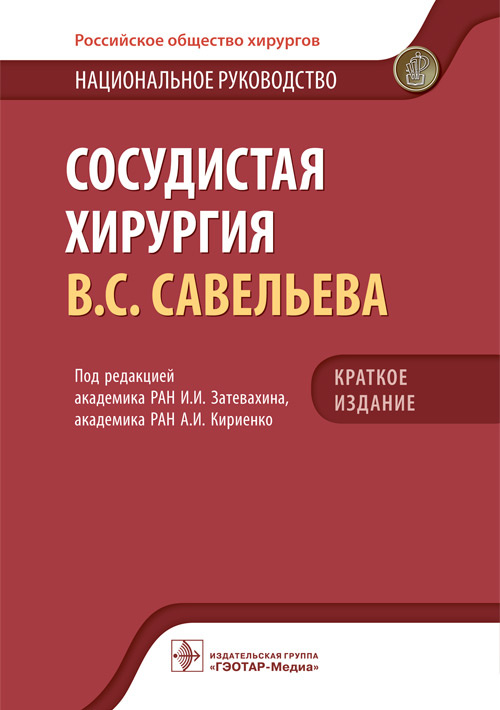
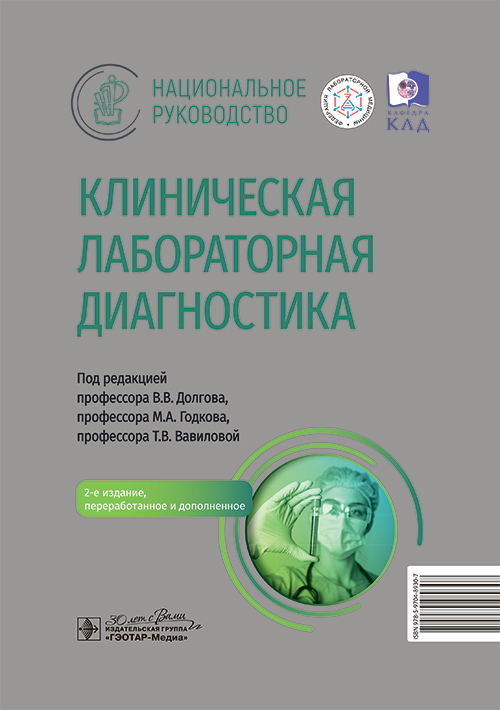
National guidelines for all fields of medicine
Clinical recommendations (guidelines)
Study guides / textbooks
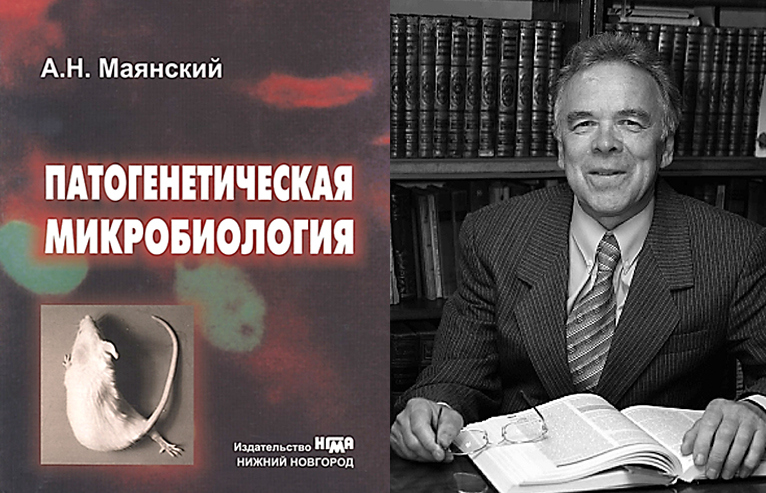
Monographs
Atlases
Pharmaceutical reference books
BookUp

Urait
ibooks.ru
Access provided until: April 23, 2026
Access Terms: Each book has an individual access key. To obtain keys, please contact the library at lib@pimunn.net. For Secondary Vocational Education (SPO) use only.
Resource URL: http://ibooks.ru
The eLibrary system ibooks.ru provides textbooks for Secondary Vocational Education (SPO).
Издательство "Академия"
Consortium of Network Digital Libraries (NDL)

Central Scientific Medical Library (SCML)

National Digital Library (NDL)
Polpred.com

Orbit Intelligence

Springer

Wiley Online Library
The Cochrane Library

Lippincott Williams & Wilkins

eBook Collections (SAGE Publications)

COVID-19 resources
Scopus Preview
Classifier of Clinical Guidelines of the Ministry of Health of the Russian Federation
Resource URL: cr.minzdrav.gov.ru/clin_recomend
Access: Free (open access).
Consultant Plus
The internet versions of the Consultant Plus reference legal system provide online access to a reduced version of the resource.
Access to documents within the following databases is available only from computers located in the library:
"Medicine. Pharmaceuticals" – regulatory documents governing the activities of medical and pharmaceutical institutions.
"Version Prof" – regulatory documents covering all sections of Russian legislation.
"Expert Supplements: President. Government. Departments" – explanatory and enforcement legal acts affecting the interests of specific organizations, as well as draft laws.
"Nizhny Novgorod Edition" – regulatory documents from the authorities and administration of Nizhny Novgorod and the Nizhny Novgorod Region.
Russian open access resources
Foreign open access resources
Foreign dissertations and abstracts of dissertations
Online periodicals
Audio and Video Resources in Medicine
International Resources (English-Language)
Academic Earth: Video lectures on medicine and other subjects.
MedCram Videos: High-quality medical lectures and videos from world-class instructors.
Harvard Medical School: Video resources from one of the world's leading medical schools.
Lecturio Medical Videos: Accessible educational videos from top international instructors.
One Minute Medical School: Short video explanations of medical concepts.

The application form for the purchase of literature can be printed from the library's website or obtained from the scientific library's Document Acquisition and library processing department.

Delivery desk of scientific literature
Delivery desk for educational literature №1
Delivery desk for educational literature №2
Hall of Information Resources
Acquisition and Cataloging Department
Department of Scientific Information
Department of Electronic Resources
Reading Room with the delivery desk of fiction
For early-career researchers embarking on dissertation work, a host of questions always arises concerning methodology, formatting rules, and defense procedures. However, obtaining clear answers to these questions is often not straightforward.
The recommended reading lists have been compiled by the bibliographers of the Scientific and Bibliographic Department to provide effective assistance to postgraduate (PhD) students and doctoral (ScD) candidates in formatting their scientific works, particularly dissertations.
In accordance with Decree of the Government of the Russian Federation No. 842 dated September 24, 2013, "On the Procedure for Awarding Academic Degrees" (Part III, Clause 27) and "Regulations on the Internal Electronic Library System of the Federal State Budgetary Educational Institution of Higher Education 'PIMU' of the Ministry of Health of Russia" No. 224 dated December 26, 2016 (Clause 4.3), degree applicants are required to submit the following final versions to the PIMU Research Library no later than 3 months before the defense date for a Doctor of Sciences (ScD) dissertation and no later than 2 months before the defense date for a Candidate of Sciences (PhD) dissertation:
The dissertation (hardbound, 1 copy).
The dissertation abstract (format A5, 1 copy).
Electronic copies of the dissertation and abstract in PDF format.
Submission Address: Nizhny Novgorod, Meditsinskaya St., 3A (Department of Scientific Information, Room 15).
Operating Hours: 9:00 AM – 6:00 PM (Monday-Friday, except the last Friday of each month).
Phone: +7 (831) 465-47-02, 422-13-33 ext. 3822 (Information Resources Hall).
For non-resident applicants: Printed copies of the dissertation and abstract must be submitted in person or via courier delivery service (to: 603104, Nizhny Novgorod, Meditsinskaya St. 3A, Research Library, Room 15). Prior contact is mandatory with the Head of the Department of Scientific Information, Elena Alexandrovna Lokteva, by phone: +7 (831) 422-13-33 ext. 3823.
Electronic copies (PDF) of the dissertation and abstract should be sent via email to: lib@pimunn.net (with the subject line: "To the Department of Scientific Information").
Upon submission and verification of all specified documents, the applicant will receive a confirmation certificate to be presented to the PIMU Dissertation Council.
A citation index is a universally accepted measure in the scientific world for assessing the significance of the work of a researcher or research team. It is also a bibliographic database that indexes references listed in the bibliographies of scientific publications and provides quantitative metrics based on these citations (such as total citation count, Hirsch index, etc.). The value of a citation index is determined by the number of citations a publication or an author receives in other sources.
The Hirsch index (h-index) is a scientometric indicator proposed in 2005 by Jorge Hirsch from the University of California, San Diego. The h-index is a quantitative measure of a scientist's productivity and citation impact, based on the number of their publications and the citations those publications receive. The index is calculated based on the distribution of citations for a given researcher's work.
A scientist has an index *h* if *h* of their Np papers have at least *h* citations each, and the other (Np – h) papers have no more than *h* citations each.
The Impact Factor (IF) is a numerical indicator of a scientific journal's importance. It is calculated as the ratio of the number of citations in a given year to articles published in that journal during the two preceding years, to the total number of "citable items" (articles, reviews, etc.) published in that journal during the same two-year period. Thus, the Impact Factor measures the frequency with which the "average article" in a journal has been cited.
The Russian Science Citation Index (RSCI) is a national information and analytical system that accumulates over 2 million publications by Russian authors, as well as information on citations of these publications from more than 3,000 Russian journals. It is designed not only to provide prompt access to current bibliographic information for scientific research but also serves as a powerful tool for evaluating the performance and effectiveness of research organizations, individual scientists, the quality of scientific journals, etc.
Access to RSCI is free via the Scientific Electronic Library eLIBRARY.ru.
On the global scientific information market, two major international citation indexes are represented:
Web of Science by Thomson Reuters (now Clarivate Analytics)
Scopus by Elsevier
Web of Science (http://ip-science.thomsonreuters.com/mjl) – developed by the Institute for Scientific Information (ISI, USA), owned by Thomson Reuters. It includes six thematic indexes. It provides researchers and specialists with information across all fields of knowledge from 8,700 authoritative scientific journals, 12,000 conference proceedings held annually, and over 4,400 websites.
Web of Science includes:
Science Citation Index Expanded (Natural Sciences database) – coverage from 1988 to present; covers natural sciences, indexes over 8,700 journals.
Social Sciences Citation Index – coverage from 1988 to present; covers social sciences, indexes over 3,200 journals.
Arts & Humanities Citation Index – coverage from 1988 to present; indexes over 1,800 journals.
Scopus (http://www.scopus.com) – is the world's largest unified abstract and citation database, indexing over 25,000 titles of scientific, technical, and medical journals from approximately 7,000 international publishers. The daily updated Scopus database includes records dating back to the first volume, first issue of leading scientific publishers' journals.


| Division | Employee | Telephone (code 8-831) |
|---|---|---|
|
Director
|
Semina Gayana Yurikovna
|
422-13-90, 422-13-33, доб. 3800
|
|
Deputy Director for Information Technology
|
Bon Julia Vladimirovna
|
422-13-33 доб. 3803
|
|
Deputy Director for Library Work
|
Pylunina Irina Evgenievna
|
422-13-33 доб. 3808
|
|
Head of the Acquisition and Cataloging Department
|
Shishkina Julia Pavlovna
|
465-47-02, 422-13-33, доб. 3802
|
|
Head of the Scientific Information Department
|
Lokteva Elena Alexandrovna
|
422-13-33 доб. 3823
|
|
Заведующий сектором библиографического обучения
|
Druzhinina Anastasia Igorevna
|
422-13-33 доб. 3804
|
|
Head of the Scientific literature department
|
Ermolaeva Nadezhda Albertovna
|
422-13-33 доб. 3825
|
|
Head of the Department of Educational Literature
|
Bolotova Olga Vladimirovna
|
422-13-33 доб. 3805
|
|
Delivery desk of scientific literature (Meditsinskaya str., 3a)
|
422-13-33 доб. 3826
|
|
|
Delivery desk for educational literature №1 (Gagarin ave., 70)
|
422-13-33 доб. 3809
|
|
|
Delivery desk for educational literature №2 (Gagarin ave., 70)
|
422-13-33 доб. 3824
|
|
|
Hall of Information Resources
|
422-13-33 доб. 3822
|
|
|
Reading Room with the delivery desk of fiction
|
422-13-33 доб. 3806
|
PIMU
just now
Latest University news
Stay up to date with all the news.